NCCHC's 2026 Standards Meet California's Correctional Health System
Two things frame correctional hearing care in California this year. First, the National Commission on Correctional Health Care's 2026 Standards for Health Services in Jails and Prisons took effect January 1, 2026, arriving in a digital format with expanded telehealth credentialing and a recommended-documentation list for every standard, and leaning on technology to ensure timely access to care.
Second, California Correctional Health Care Services delivers medical, dental, and mental-health care across all 31 CDCR institutions statewide, under regulations published in Title 15, Division 3 of the California Code of Regulations. That is a large, distributed system in which timely, well-documented on-site screening is a genuine operational challenge.
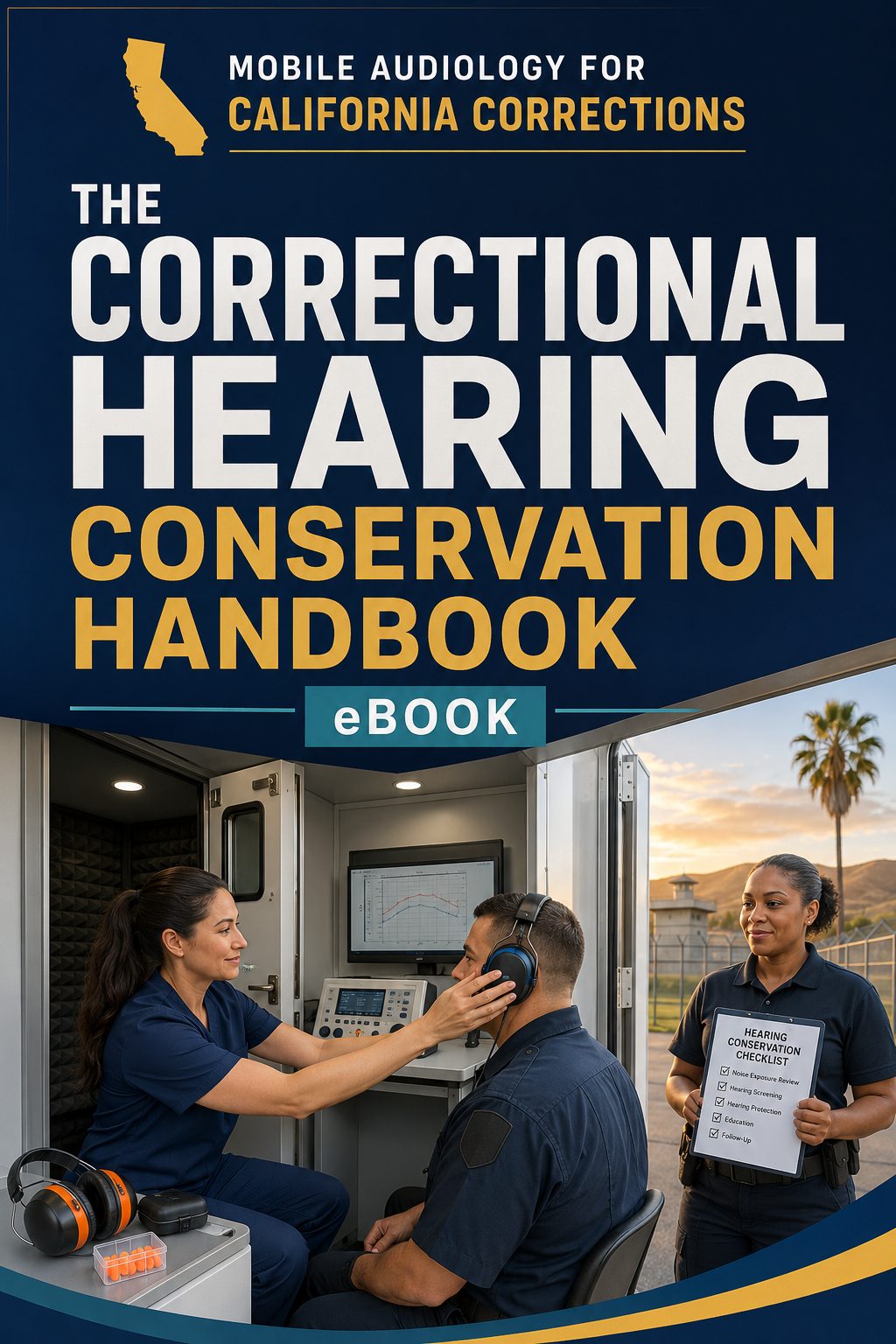
On-site audiology answers both pressures at once: it brings calibrated hearing testing inside the facility, supports the timely-access emphasis the 2026 standards care about, and produces the itemized documentation a survey now expects.
It helps to remember why hearing turns up so often in a correctional population. NIOSH reports that about 27 million U.S. workers are exposed to hazardous noise each year and roughly 22 million to ototoxic chemicals, and that about one in nine people in the working population already has some hearing difficulty. Many incarcerated adults arrive from exactly the industries — construction, manufacturing, transport, agriculture — where that exposure concentrates, and arrive without ever having had a baseline audiogram. Screening inside the facility is frequently the first hearing test a person has had in their adult life.
The clinical stakes go beyond the audiogram. NIOSH notes that hearing loss is associated with tinnitus, cardiovascular problems, cognitive decline and poorer mental health, and that people who cannot hear well are more likely to be injured. Inside a facility, unheard instructions are also a custody and safety problem: a direction not followed can read as defiance rather than deafness. Identifying and correcting hearing loss is therefore not only a health-services obligation — it measurably reduces friction on the yard and in the housing unit.
Sources: NCCHC — 2026 Standards; California Correctional Health Care Services; NIOSH — Occupational Hearing Loss